
Enterprise Internet Features at San Antonio Technology Center

Introduction

Connectivity isn’t a commodity when your business depends on it. For technology companies, biotech firms, and data-driven operations, a dropped connection or degraded bandwidth doesn’t just slow productivity — it costs revenue and erodes client confidence.

San Antonio Technology Center was built from the ground up around one principle: the infrastructure has to be better than what your team could build on their own. That means enterprise-grade internet with genuine redundancy, carrier diversity most standalone buildings can’t match, and the kind of throughput that scales with your operation — not against it.

This page covers the internet and connectivity features that come standard for every tenant and colocation client at SATC. Whether you’re evaluating office space in San Antonio or a cabinet in our data center, this is what’s under the hood.
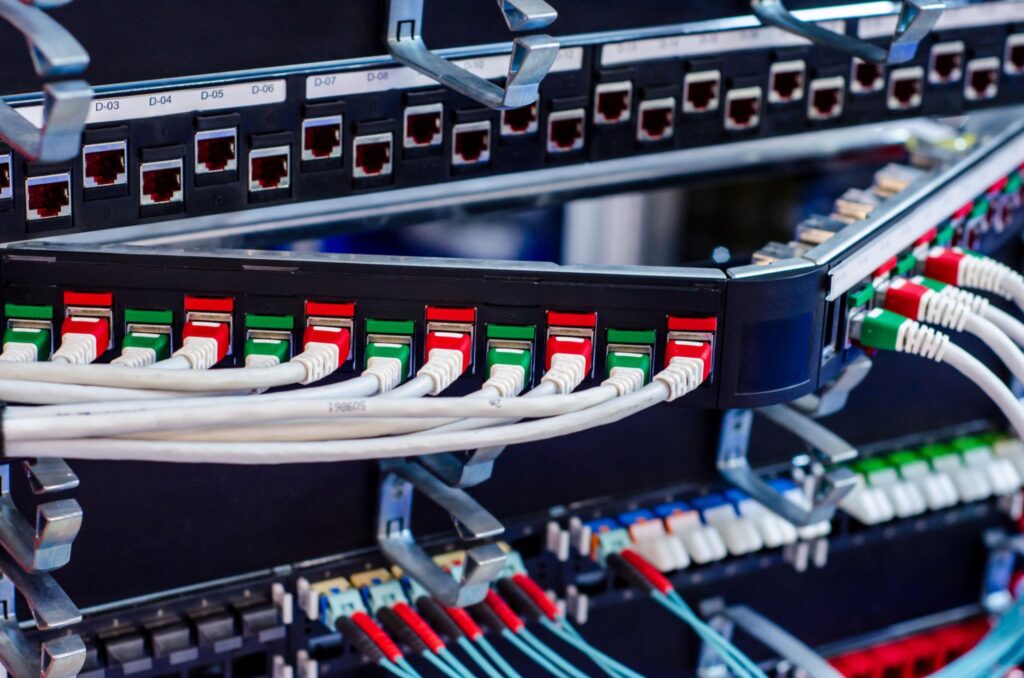

High Speed & Bandwidth

SATC delivers dedicated, high-throughput internet access engineered for enterprise workloads. This is not shared residential-grade service relabeled for commercial use — it is purpose-built connectivity designed to handle simultaneous, bandwidth-intensive activity across multiple tenants without degradation.
Tenants benefit from:
  • Dedicated bandwidth allocation that doesn’t fluctuate based on building usage
  • Symmetric upload and download speeds critical for teams running cloud-based applications, video conferencing, large file transfers, and real-time data pipelines
  • Scalable capacity — as your team or workload grows, your bandwidth can grow with it without a facility change
For biotech and cybersecurity tenants — two industries well-represented at SATC — high bandwidth is a functional requirement, not a nice-to-have. Genomic data transfers, security event log aggregation, and cloud-native applications all place consistent demands on infrastructure that shared office buildings frequently fail to meet.
Why it matters for your business
Slow or inconsistent internet is one of the most common complaints that drives businesses out of shared office environments. At SATC, connectivity is treated as core infrastructure, not an amenity.

Transit Peering Through AT&T, Spectrum, and Level 3

SATC maintains direct transit peering relationships with three major carriers: AT&T, Spectrum, and Level 3 (now part of Lumen Technologies). This is what separates enterprise-grade connectivity from standard commercial internet — and it directly affects the performance your team experiences every day.
What transit peering means for your team:
Transit peering allows data traveling to and from SATC to take the most efficient route across the internet. Rather than routing through multiple intermediary networks that introduce latency and potential points of failure, peered traffic travels more directly between SATC and its destination. The result is lower latency, faster load times, and more consistent throughput.

Carrier redundancy as a business continuity tool:

Having three independent carrier relationships means that a disruption at any single provider does not take your business offline. Failover routing between carriers happens at the network level, transparently and automatically, keeping your operations running.

For businesses in regulated industries — healthcare, financial services, government contracting — multi-carrier redundancy is frequently a compliance requirement as well as a practical safeguard.

Carrier overview:

Carrier

Role at SATC

Notable Strength

AT&T

Primary transit

Deep fiber footprint across Texas

Spectrum

Secondary transit

Strong metro coverage in San Antonio

Level 3 / Lumen

Tier 1 backbone

Global IP backbone with low-latency routing

Crystal Clear VoIP Phone Systems

SATC’s building infrastructure is optimized for Voice over IP (VoIP), giving tenants access to professional-grade phone systems without the cost and complexity of maintaining traditional PSTN infrastructure.

Why VoIP quality at SATC is different:

VoIP quality is almost entirely a function of the network it runs on. Jitter, packet loss, and latency — the three variables that make VoIP calls sound degraded — are direct byproducts of poor network infrastructure. Because SATC’s connectivity is purpose-built for enterprise workloads with low jitter and minimal packet loss, VoIP performance here is measurably better than in standard commercial office environments.

Tenants using cloud PBX platforms (RingCentral, Zoom Phone, Microsoft Teams calling, 8×8, and others) benefit from:

  • Clean, consistent audio quality on calls
  • Reliable video conferencing without dropped connections mid-session
  • Smooth integration with CRM and helpdesk platforms that depend on real-time call data

For client-facing teams, this matters. Poor call quality on a sales call or support interaction reflects on your brand, not your carrier. SATC’s infrastructure removes network quality as a variable.

Highly Redundant Infrastructure

Redundancy at SATC is not a single point — it is layered across the entire connectivity stack. The goal is to eliminate single points of failure at every level so that a hardware issue, carrier disruption, or power event does not cascade into a service outage.
The redundancy architecture covers:

Network redundancy: Multiple upstream carriers with automatic failover, as described in the transit peering section above. No single carrier failure can isolate SATC from the internet.

Physical pathway redundancy: Network infrastructure is distributed across the building with physical separation between pathways, reducing the risk that a localized physical event affects connectivity globally.

Power redundancy: Internet infrastructure operates on the same power generation systems that support SATC’s data center (see In-House Co-location Services for full detail). On-site power generation provides continuity during grid events.

Hardware redundancy: Core network hardware is deployed in redundant configurations so that a failed component triggers seamless failover rather than a service interruption.

What this means operationally: SATC can commit to uptime levels that most single-tenant office buildings cannot. For companies where connectivity downtime translates directly to revenue loss — e-commerce, SaaS operations, financial trading, or any business with SLAs — this level of redundancy is a real business advantage, not a technical footnote.

Frequently Asked Questions

SATC offers scalable bandwidth options to fit different operational needs. Contact our team to discuss specific throughput requirements and what configurations are available for your use case.
SATC’s multi-carrier infrastructure is part of the facility’s built-in value. Tenants benefit from the existing carrier relationships and redundancy architecture. Talk to our team about connectivity options when you tour.
ATC’s colocation and connectivity infrastructure can accommodate a range of enterprise network setups. Discuss your specific requirements with our technical team.
Most commercial office buildings in San Antonio use a single ISP with no carrier redundancy or peering. SATC’s multi-carrier, transit-peered infrastructure is closer to what you’d find in a dedicated data center environment — which makes sense, given that SATC houses an on-site data center.

Ready to See It in Person?

The best way to understand SATC’s connectivity infrastructure is to tour the facility and talk directly with our technical team. We’ll walk you through how the network is built, answer questions specific to your use case, and show you available office and colocation space.

Schedule a Tour | Call Us at (210) 582-5800 | See Available Office Space

Scroll to Top