
San Antonio Data Center — SATC
Co-Location On-Site Enterprise Colocation
Introduction
Most San Antonio data centers are built for one thing: racks. You colocate your equipment, manage everything remotely, and the relationship starts and ends with a cabinet.
SATC Co-Location is built differently. Located inside San Antonio Technology Center at 3463 Magic Dr in the South Texas Medical Center district, our data center sits inside a working technology campus — where biomedical firms, cybersecurity operations, and tech companies also lease office space. Your infrastructure team can work next door to the hardware they manage. Your business can be in the same building as your caged environment. That proximity is something no hyperscale provider in San Antonio can offer.
For businesses that need physical San Antonio data center presence — whether for disaster recovery, client-proximity hosting, data residency requirements, or a cloud-exit strategy — SATC Co-Location is the right conversation to start.
What Is SATC Co-Location?
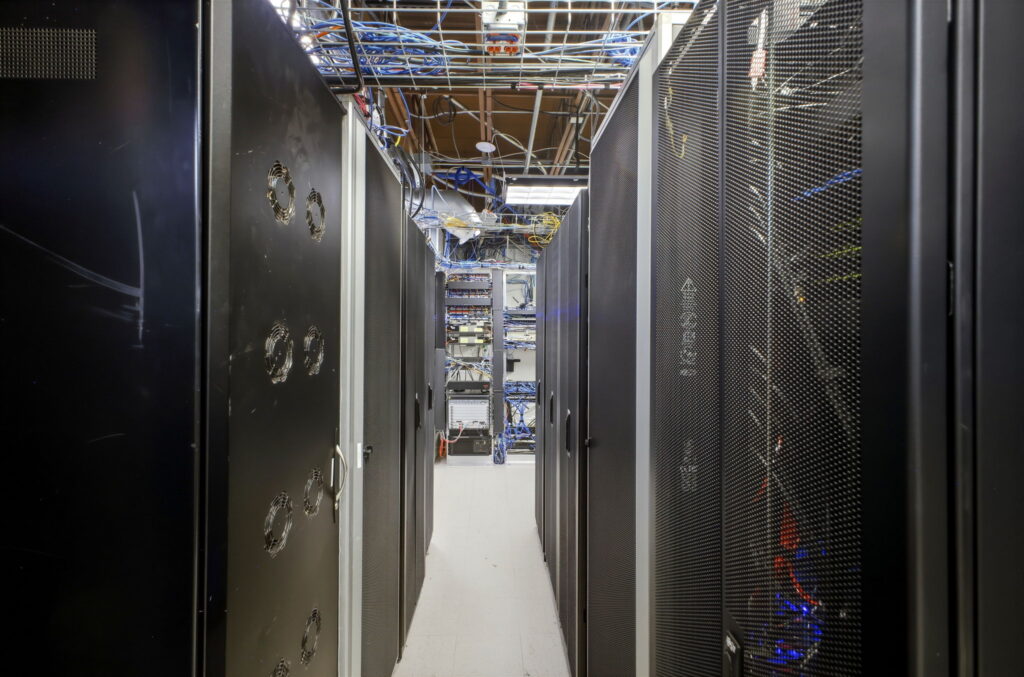
SATC Co-Location is the data center operation housed within San Antonio Technology Center. It provides cabinet-level colocation with enterprise power architecture, multi-carrier fiber, on-site network operations support, and physical security infrastructure — all in a facility that also serves as a technology office campus.
The co-location environment operates independently from the office side of the building while sharing the same physical infrastructure advantages: the same redundant power generation, the same carrier-grade connectivity, and the same 24/7 physical security layer.
For technology companies with both office and infrastructure needs, this is the only location in San Antonio where a single address handles both.
Power Infrastructure Built for Uptime
Downtime in a colocation environment is not an inconvenience — it is a direct financial event. SATC Co-Location’s power infrastructure is designed with that reality in mind.
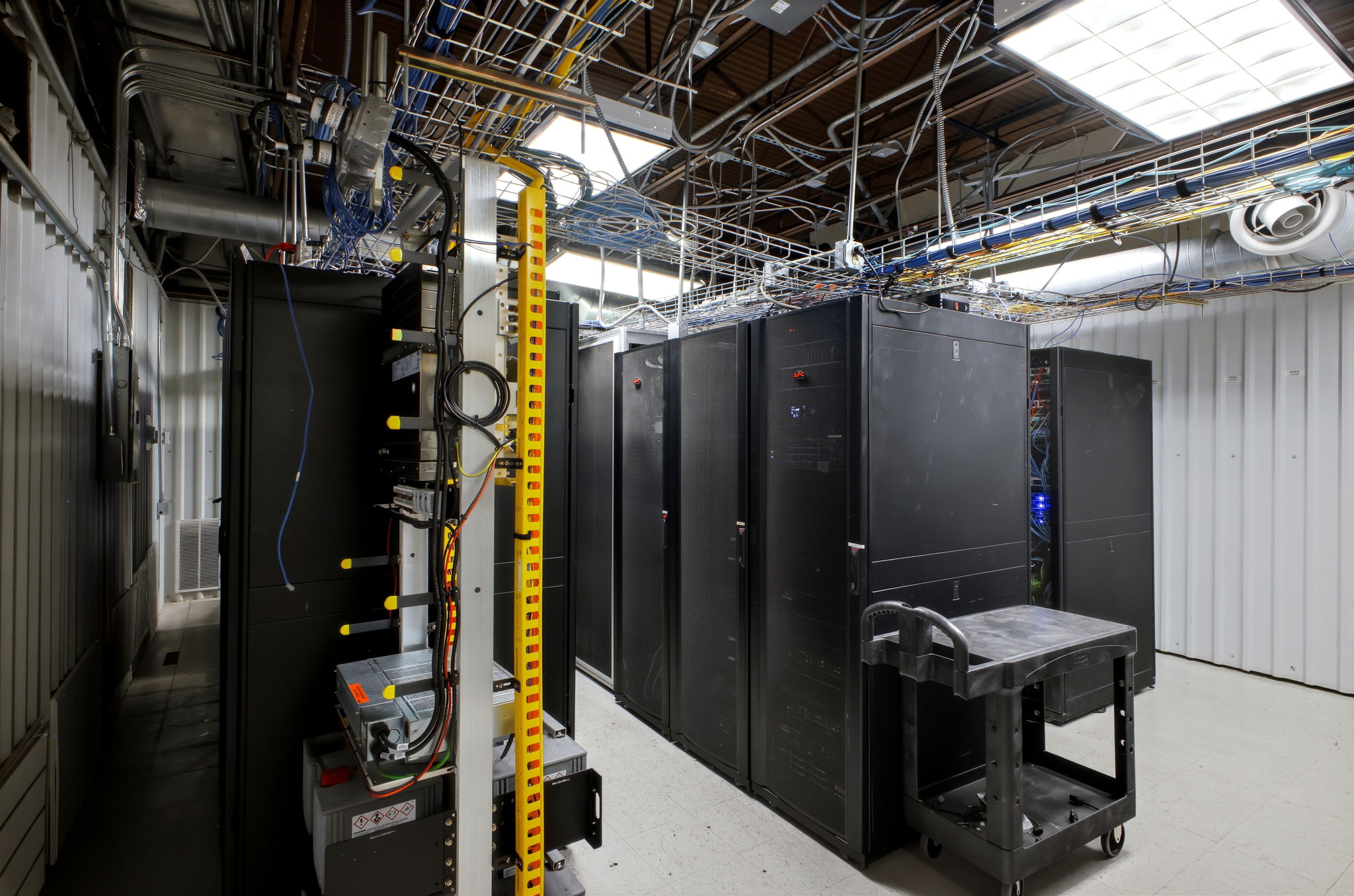
On-site power generation ensures continuity when utility power fails.
The facility’s generator systems provide backup power capacity for the data center environment, eliminating the gap period between a utility outage and infrastructure recovery that plagues underpowered colocation facilities.
What this means for your hosted environment:
- Planned utility maintenance does not create scheduled downtime windows
- Unplanned outages trigger automatic power transfer — your equipment stays online through the switchover
- The same power architecture that backs the data center floor supports SATC’s network infrastructure
San Antonio’s power grid is served by CPS Energy, one of the largest municipally owned utilities in the United States. SATC’s on-site generation adds a second layer of resilience independent of grid stability.
Carrier-Diverse Fiber: Three Paths In, Zero Single Points of Failure
The bandwidth architecture at SATC Co-Location reflects the same philosophy as the power infrastructure: no single point of failure.
SATC maintains direct transit peering relationships with AT&T, Spectrum, and Level 3 (Lumen) — three independent carrier pathways into the building. Colocation clients benefit from this infrastructure directly.
Why carrier diversity matters for hosted infrastructure:
- A fiber cut or carrier-level disruption affecting one provider does not bring your hosted environment offline
- Traffic is routed across the most efficient available path in real time — reducing latency for latency-sensitive workloads like financial applications, real-time analytics, and hosted VoIP
- Multi-carrier access at the rack level supports clients with specific carrier requirements for compliance, client SLAs, or regulatory data routing
For colocation clients who also operate San Antonio offices at SATC, the same carrier infrastructure serves both environments — your office connectivity and your hosted equipment are backed by the same redundant fiber architecture.
Physical Security: Multi-Layer Access Control
Every cabinet at SATC Co-Location operates within a physical security architecture designed to meet the documentation requirements of regulated industries — not just keep unauthorized personnel out.
Access controls include:
- Biometric fingerprint authentication at the facility entry level — no PIN guessing, no lost key card vulnerabilities
- Cage key system with per-client access credentials — your cabinet space is accessible only to personnel you authorize
- 24/7 high-definition camera coverage throughout the colocation environment, access corridors, and building entry points
- Logged access records for every facility entry event — the audit trail compliance reviewers require
Industries that regularly require this level of physical access documentation include:
Healthcare organizations handling Protected Health Information (PHI) under HIPAA, financial services firms with SOC 2 or PCI DSS audit requirements, defense and government contractors operating under CMMC, and any business subject to a data security audit where physical access controls are a documented requirement.
SATC Co-Location’s access architecture supports the control evidence these frameworks require.
On-Site NOC and In-House Cloud Expertise
Remote management and a ticketing queue are not the same as having technical staff in the building.
SATC Co-Location maintains an on-site Network Operations Center with staff who monitor and manage the facility infrastructure — the same team that handles the building-wide connectivity environment. When something needs attention at 2 a.m., the response is not a call center in another time zone. It is personnel with physical access to your environment who understand the infrastructure from the inside.
The technical team also brings in-house cloud architecture expertise — supporting clients who run hybrid workloads, clients navigating cloud-exit migrations, and clients evaluating which workloads belong in a physical caged environment versus which remain in public cloud.
This matters most for:
- Companies running steady-state compute workloads (where physical colocation TCO typically beats equivalent cloud compute by a significant margin)
- Businesses with data residency or sovereignty requirements that prohibit certain public cloud regions
- Organizations moving Texas-based operations to a dedicated physical presence after assessing cloud egress cost at scale
Fast Provisioning: From Signed Agreement to Live Cabinet
This speed matters for:
- Business relocations and new San Antonio market entries that need infrastructure up before staff arrives
- Disaster recovery deployments where staging delay defeats the purpose
- Clients who need to establish a physical Texas presence to satisfy data residency, client contract, or compliance requirements on a defined timeline
SATC does not require multi-year minimum commitments to get started. The intake process involves direct access to technical staff who can answer configuration questions before you sign — not a sales workflow that routes every question through an account manager.
Why SATC Over CyrusOne, H5, or Other San Antonio Options?
San Antonio hosts 44 data center facilities. Most fall into one of two categories: hyperscale campuses (CyrusOne’s 175,000 SF, 18 MW SAT5-SAT6 facility; H5 Data Centers’ 85,000 SF two-building campus) or single-purpose colocation shells with minimal on-site support.
SATC Co-Location occupies a different position:
SATC Co-Location | Hyperscale (CyrusOne / H5) | |
Scale | SMB-to-mid-enterprise | Enterprise / hyperscale |
Provisioning | Days | Weeks to months |
On-site office space | Yes — same building | No |
Minimum commitment | Flexible | Multi-year typically |
Technical access | Direct, on-site | Ticketed / remote |
Carrier diversity | AT&T, Spectrum, Level 3 | 35+ carriers (H5) |
Location | Medical Center district | North / Northwest SA |
Biotech / healthcare proximity | South Texas Medical Center — adjacent | Not adjacent |
For a mid-sized technology company, biotech operation, or cybersecurity firm that needs a physical San Antonio data center presence without a hyperscale footprint — and wants the option of office space in the same building — SATC is the only option in the market that fits.
Frequently Asked Questions
What types of businesses colocate at SATC?
SATC Co-Location serves technology companies, biomedical and life sciences operations, cybersecurity firms, SaaS providers, and businesses with steady-state compute workloads that have outgrown or are moving away from public cloud dependence. Our tenant base reflects the same profile as the building’s office tenants — technology-focused businesses operating in San Antonio’s Medical Center and greater metro area.
Does SATC Co-Location support HIPAA-regulated workloads?
SATC’s physical security architecture — biometric access, logged entry, cage key system, 24/7 camera coverage — supports the physical safeguard documentation requirements under HIPAA.
How does SATC handle network redundancy?
SATC Co-Location maintains direct transit peering with AT&T, Spectrum, and Level 3, providing three independent carrier pathways into the building. A single carrier disruption does not take hosted environments offline — traffic routes automatically across available carriers.
Can my team work in the same building as our colocated hardware?
Yes. SATC Technology Center offers professional office space in the same building as the colocation environment. Companies that colocate equipment at SATC can lease office space on the same campus, eliminating split-site management and reducing the operational complexity of maintaining separate office and infrastructure addresses.
What makes San Antonio a good location for data center colocation?
San Antonio has 44 data center facilities and sits in a geography with low natural disaster risk — no significant earthquake, tornado, or hurricane exposure. CPS Energy provides a stable, cost-competitive municipal power utility. The city’s growing technology sector, proximity to medical and biotech institutions, and position as a secondary Texas market (with lower costs than Dallas) make it a strong choice for physical infrastructure presence.
How do I get started? Contact us at (210) 582-5800 or request a tour through our contact page. Our technical team can answer configuration questions, walk you through the facility, and provide a quote based on your specific requirements.
How do I get started?
Contact us at (210) 582-5800 or request a tour through our contact page. Our technical team can answer configuration questions, walk you through the facility, and provide a quote based on your specific requirements.