
Internet Connectivity in San Antonio

Enterprise Fiber at SATC

Introduction

Internet connectivity in San Antonio is not a commodity. The difference between a standard commercial ISP connection and enterprise-grade multi-carrier fiber is measured in reliability, symmetry, redundancy — and ultimately, in how often your business stops working because the internet went down.

At San Antonio Technology Center — 3463 Magic Dr, San Antonio, TX 78229 — internet connectivity is built to a different specification than you’ll find in a standard Medical Center commercial building.

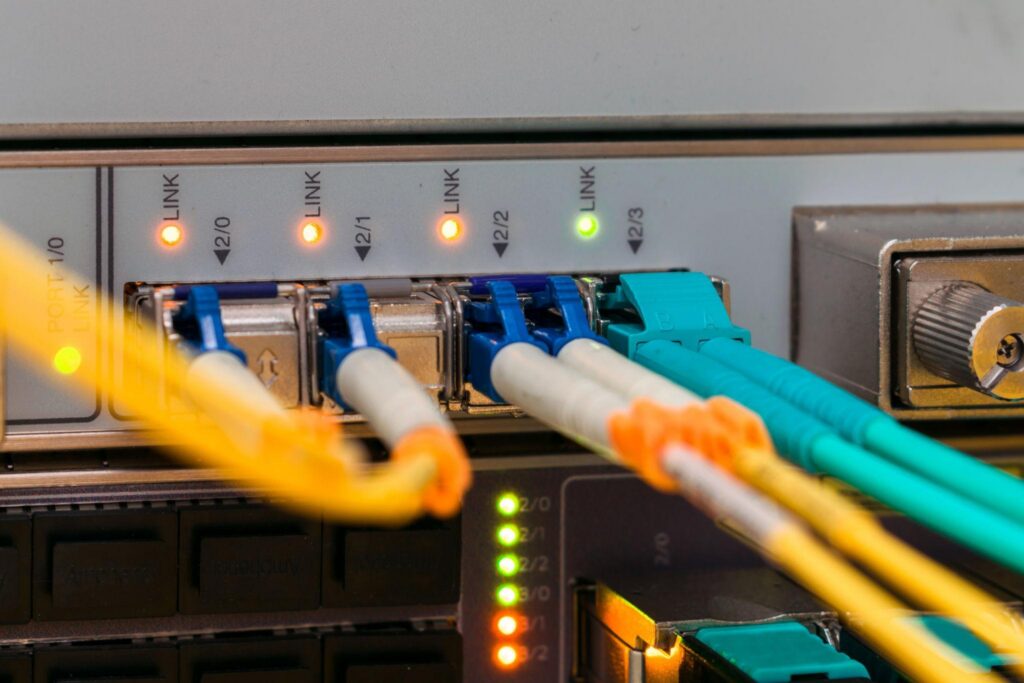
SATC maintains direct transit peering with AT&T, Spectrum, and Level 3 (Lumen) — three independent fiber carriers providing redundant multi-gigabit connectivity to the building’s office tenants and colocation clients. When one carrier has a disruption, traffic routes automatically to the others. No downtime, no support ticket, no waiting.

For businesses in San Antonio’s Medical Center district that need to stay online — always — this is what that looks like. 
Why Internet Connectivity Matters More for San Antonio's Technology Sector

San Antonio’s economy has historically been driven by military, healthcare, and financial services — sectors where business ran on processes and people, not real-time data connections.

That has changed. The businesses now growing fastest in San Antonio’s Medical Center district and broader technology sector are connectivity-dependent in ways their predecessors were not:

  • Biomedical and life sciences operations transfer genomic datasets, operate remote laboratory instruments, and collaborate with research institutions across the country on real-time data links
  • Cybersecurity firms aggregate security event logs from enterprise clients, run real-time threat intelligence feeds, and operate security operations centers that cannot tolerate connection interruptions
  • Healthcare IT platforms serve clinical clients with uptime SLAs where connectivity failure is a contract event
  • SaaS and technology companies operate cloud-first architectures where the internet connection is as critical as the power connection

For these businesses, connectivity is not an amenity. It is operational infrastructure — and the gap between a standard commercial ISP connection and enterprise-grade multi-carrier fiber is the difference between a building that works and one that creates recurring business interruptions.

Three-Carrier Architecture: How SATC's Connectivity Is Built

SATC’s internet infrastructure begins where most commercial buildings end. Rather than contracting a single ISP and running their handoff through the building, SATC maintains direct transit peering with three independent carriers.
AT&T Fiber

AT&T is one of the two dominant fiber network operators in San Antonio, with extensive local loop infrastructure serving the Medical Center district specifically. AT&T’s peering relationship with SATC provides:

    • Local loop infrastructure with deep coverage in the 78229 zip code
    • AT&T’s national backbone for inter-city and international routing
    • Routing diversity separate from cable-based ISP infrastructure

Spectrum Business

Spectrum Business operates an independent fiber network in San Antonio that provides genuine path diversity from AT&T — using different physical routes and different upstream infrastructure. A fiber cut affecting AT&T’s plant does not affect Spectrum’s, and vice versa.

Level 3 / Lumen Technologies

Level 3 (now part of Lumen Technologies) is a Tier 1 global internet backbone carrier — one of the networks that other carriers peer with to reach the global internet. Direct Level 3 peering at SATC means traffic bound for international destinations, cloud platforms with Level 3 CDN relationships, or latency-sensitive global applications routes through backbone-grade infrastructure rather than through a retail ISP’s aggregation layer.

The result: Three independent paths into and out of the building. One carrier disruption — fiber cut, routing issue, scheduled maintenance — does not affect the others. Traffic distributes automatically across available paths based on real-time routing optimization.

What Symmetric Speeds Mean for Your Operations

Most residential and standard commercial internet connections are asymmetric: download speeds are much faster than upload speeds. This design reflects how most consumer internet usage works — lots of content coming in, relatively little going out. Technology and life sciences operations work differently.

Symmetric speeds — equal upload and download capacity — matter for:

Research data transfer. Sending large datasets to collaborating institutions, uploading genomic data to analysis platforms, or syncing experimental results to cloud storage is limited by upload speed. Symmetric connections eliminate this constraint.

Remote backup and replication. Off-site backup performance is determined entirely by upload capacity. A 500 Mbps download connection with 50 Mbps upload generates backups that take 10x as long as a symmetric 500 Mbps connection.

Video conferencing and unified communications. The quality of your outbound video and audio in Microsoft Teams, Zoom, or Google Meet is a function of upload capacity. Client-facing teams operating on asymmetric connections frequently experience the disconnect between “fast internet” (download) and degraded video call quality (upload).

Real-time instrument control. Laboratory instrument monitoring and control over network connections requires sustained low-latency bidirectional communication — not burst download capacity.

SATC provides symmetric speeds to building tenants.

Local SEO Context: Connectivity in San Antonio's Medical Center District

San Antonio’s Medical Center district (zip code 78229) is one of the more connectivity-demanding commercial submarkets in the city — concentrating the types of businesses that need enterprise-grade internet in a relatively small geographic area.

The 78229 zip code contains:

  • Multiple hospital systems with digital health infrastructure
  • Federal research facilities with data security requirements
  • Private biotech and life sciences companies with genomic and clinical data workloads
  • Cybersecurity firms with classified and sensitive data environments
  • Technology companies serving the healthcare sector with uptime SLAs

Despite this concentration of connectivity-demanding businesses, the supply of multi-carrier enterprise fiber in standard commercial buildings in the district is limited. Most commercial buildings in 78229 offer single-carrier ISP service from a single provider.

SATC’s three-carrier architecture is not typical for the Medical Center submarket. It is the exception.

Connectivity for Colocation Clients

SATC’s fiber architecture serves both office tenants and colocation clients through SATC Co-Location. For colocation clients, the same carrier-diverse infrastructure that backs the office environment is available for hosted infrastructure — with additional configuration options including:

The proximity advantage applies directly: colocation clients whose teams also work at SATC benefit from near-zero latency between office workstations and hosted equipment — a performance characteristic that remote data center arrangements cannot match.

Colocation and data center details →

Provisioning: Online Fast

New SATC tenants are provisioned for connectivity [PENDING: Evan Gray — confirm timeline in days] from agreement. This is meaningfully faster than standard commercial ISP new-service installations, which typically involve carrier work orders and 30–60 day provisioning windows.

For businesses establishing a new San Antonio presence on a defined timeline — a market entry, a client deployment, a facility expansion — SATC’s provisioning speed is a practical operational advantage.

Frequently Asked Questions

SATC maintains direct transit peering with AT&T, Spectrum, and Level 3 (Lumen) — three independent fiber carriers providing redundant enterprise-grade connectivity to the building’s office and colocation clients.
SATC provides symmetric fiber internet — equal upload and download capacity — appropriate for data-intensive technology and life sciences workloads.
SATC’s three-carrier architecture provides automatic failover between carriers. If one provider experiences a disruption, traffic routes across the remaining two without manual intervention. A single-carrier outage does not take building connectivity offline.
SATC provisions internet access for new tenants in days — significantly faster than standard commercial ISP new-service timelines.
San Antonio Technology Center is located at 3463 Magic Dr, San Antonio, TX 78229, in the South Texas Medical Center district. (210) 582-5800
Scroll to Top