
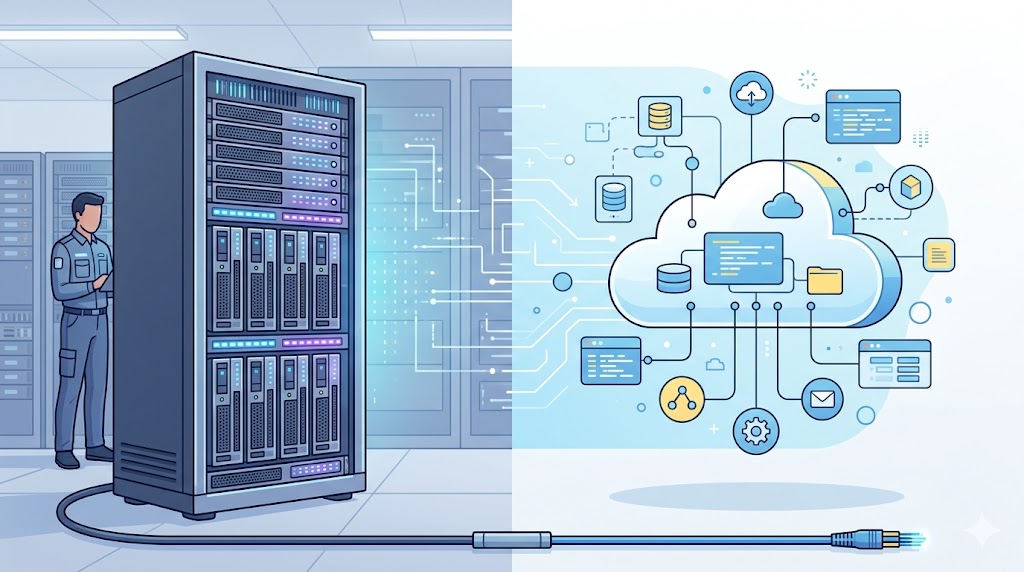
For most of the last decade, the conversation was one-directional: move everything to the cloud. The economics were obvious, the operational flexibility was real, and for many workloads, the decision was correct.
The conversation in 2026 is more complicated. A Barclays CIO Survey found that 86% of enterprise IT leaders are planning to move at least some workloads back to private infrastructure. The global colocation market, valued at roughly $68 billion today, is projected to reach $204 billion by 2030 — a 14.4% compound annual growth rate that does not suggest an industry in decline.
For San Antonio businesses evaluating their infrastructure strategy — whether you are running a biotech research environment, a SaaS platform, a clinical data operation, or a cybersecurity practice — the colocation vs. cloud question deserves a more honest answer than the cloud vendors typically provide.

What Has Actually Changed: The Cloud Cost Reality
The cloud’s value proposition was always clearest for two use cases: variable workloads that spike unpredictably, and early-stage businesses that cannot afford capital expenditure on physical infrastructure.
For businesses past those early stages, with workloads that are predictable, compute-intensive, and running at scale — the TCO math often tells a different story.
Egress fees are the cost cloud providers do not advertise. Moving data out of AWS, Azure, or Google Cloud to your own systems, to collaborating institutions, or to clients costs money — per gigabyte, every time. For a biotech operation transferring genomic datasets, a healthcare IT platform moving clinical records, or a cybersecurity operation aggregating event logs from enterprise clients, egress fees accumulate into a significant line item that does not appear in the initial cloud cost estimate.
Compute costs compound at scale. The per-hour pricing that makes cloud accessible at low volume becomes expensive at sustained high volume. A DataBank 2026 analysis found that for steady-state workloads — particularly compute-intensive operations common in biotech research, cybersecurity, and SaaS platforms — physical colocation in a carrier-grade facility typically delivers a lower total cost of ownership than equivalent cloud compute once egress fees and sustained per-hour compute pricing are factored in over a 3–5 year horizon.
The AI workload problem. Standard cloud compute pricing assumes commodity x86 workloads. The GPU compute required for AI and machine learning — genomic analysis, medical imaging, large-scale cybersecurity event correlation — is dramatically more expensive in the cloud than on dedicated hardware. Rack-level power density requirements for modern AI workloads (50–100 kW/rack) create a physical infrastructure demand that hyperscale cloud providers are increasingly constrained to meet, while purpose-built colocation facilities have the flexibility to provision for it.
The Control and Compliance Case for Colocation
Cost is one dimension. Control is another — and for regulated industries in San Antonio’s economy, it is often the more important one.
Physical data sovereignty. For healthcare organizations, clinical research environments, and defense contractors with data handling requirements, “your data is in a cloud region” is not always a sufficient answer. Knowing exactly where your data physically resides, being able to audit the physical access controls on the hardware it runs on, and having documented evidence of who can touch that hardware — these requirements exist for HIPAA, CMMC, and certain government contracting frameworks, and they are significantly easier to satisfy in a colocation environment than in a shared public cloud.
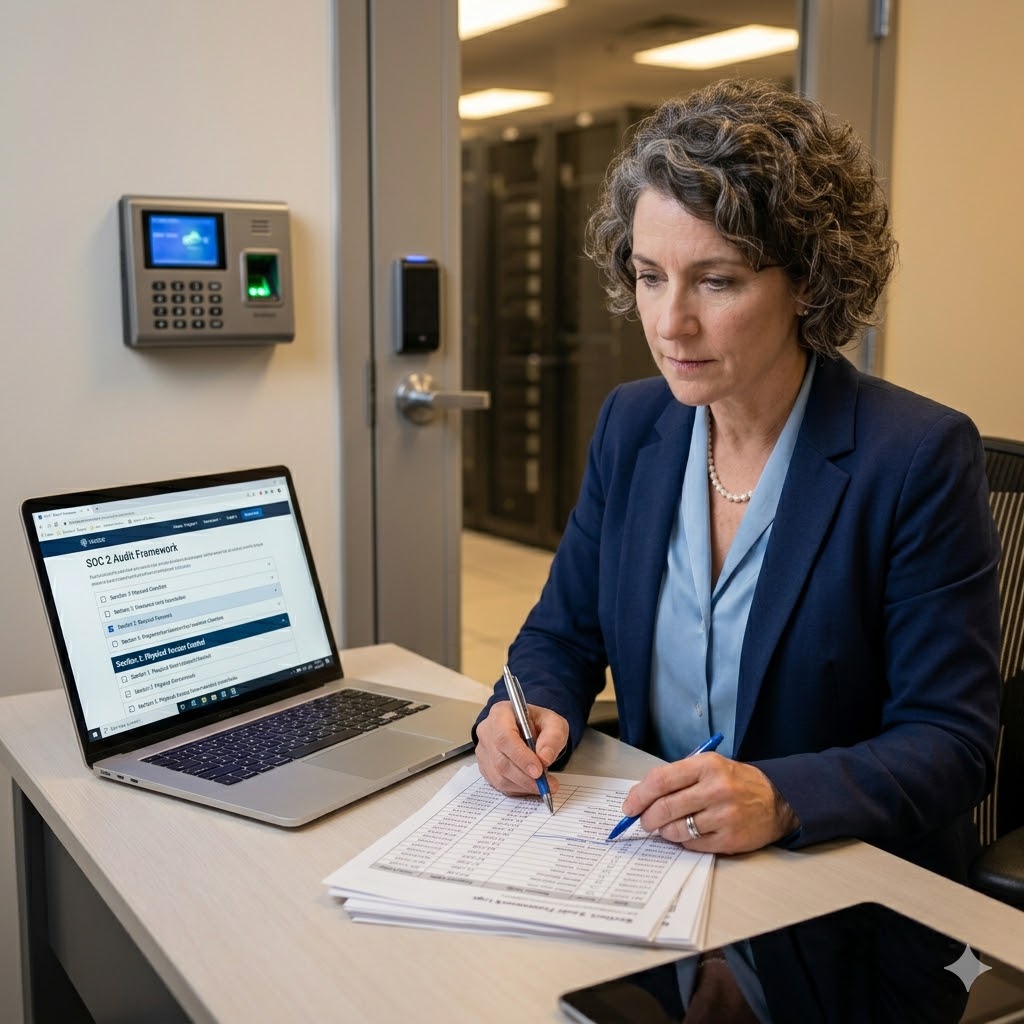
Audit evidence generation. SOC 2 Type II audits, PCI DSS assessments, HIPAA risk analyses, and CMMC Level 2+ assessments all include physical access control requirements. A colocation environment with biometric entry, logged access records, cage key systems, and HD camera coverage generates the audit evidence these frameworks require. Public cloud environments provide their own compliance documentation, but do not allow you to produce the physical access audit trail that certain compliance frameworks require from you as the covered entity.
Incident response time. When something goes wrong with physical infrastructure in a colocation environment, the response is a phone call to a team that is physically in the same building as your equipment. In a cloud environment, the response is a support ticket, a wait queue, and a remote team whose relationship with your specific workload is limited to what a monitoring dashboard shows.
For San Antonio businesses operating in healthcare, life sciences, defense, and financial services — sectors that dominate the Medical Center and JBSA ecosystems — these control and compliance considerations are not theoretical. They are audit requirements.
The Texas Advantage for Colocation
San Antonio and Texas more broadly have structural advantages for physical data center infrastructure that the cloud vs. colocation debate often ignores.
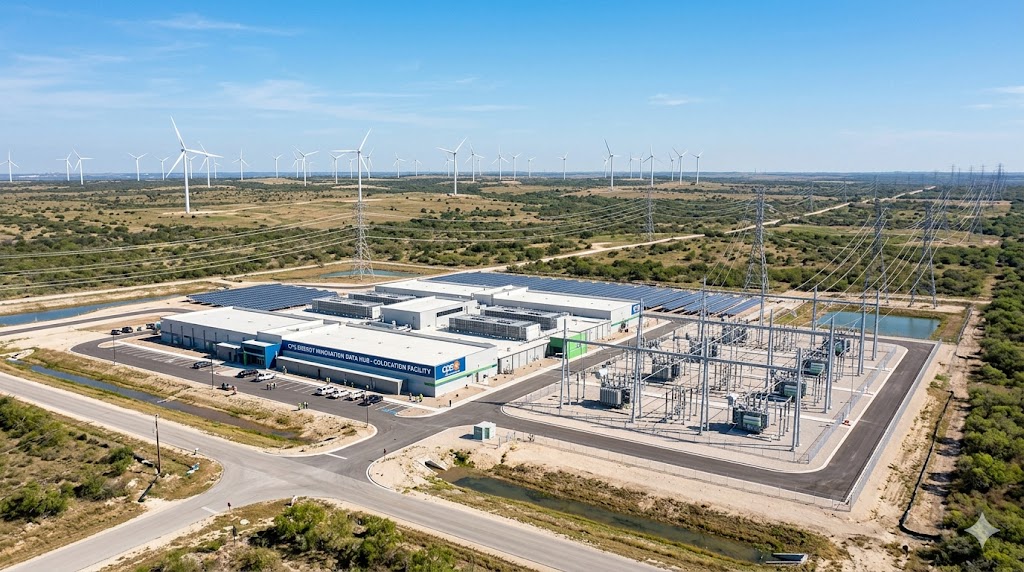
Energy cost and stability. ERCOT — Texas’s independent power grid — provides competitive electricity rates relative to most U.S. markets. CPS Energy, San Antonio’s municipal utility, is one of the nation’s largest and most stable municipal utilities. For colocation facilities that pass energy costs through to clients (or absorb them), Texas’s power cost advantage translates directly to lower total infrastructure cost.
Geographic risk profile. San Antonio has a low natural disaster risk profile — no significant earthquake exposure, not on a major hurricane path, and historically lower tornado risk than the Dallas-Fort Worth corridor. For infrastructure that needs to stay online through weather events, San Antonio’s geographic risk profile is a meaningful advantage over other major U.S. data center markets.
Texas has 350 data center facilities across 24 markets, with San Antonio hosting 44 facilities. The market infrastructure — fiber backbone, carrier availability, power grid redundancy — supports colocation deployments across a range of scales without the capacity constraints that are beginning to affect Northern Virginia (currently at 0.72% vacancy).
When Cloud Is Still the Right Answer
This analysis is not an argument against cloud. For specific workloads and specific business situations, cloud is clearly the right infrastructure choice.
Variable and unpredictable workloads. Clinical trial data platforms that need to scale compute during active trial phases and reduce to near-zero between trials. Marketing technology platforms with seasonal demand spikes. Early-stage businesses that cannot project their compute requirements 18 months out.
SaaS delivery infrastructure. If your product is software delivered over the internet to clients in multiple geographies, cloud infrastructure — with its regional availability, managed services, and built-in CDN options — is often more operationally efficient than building equivalent distribution from colocation.
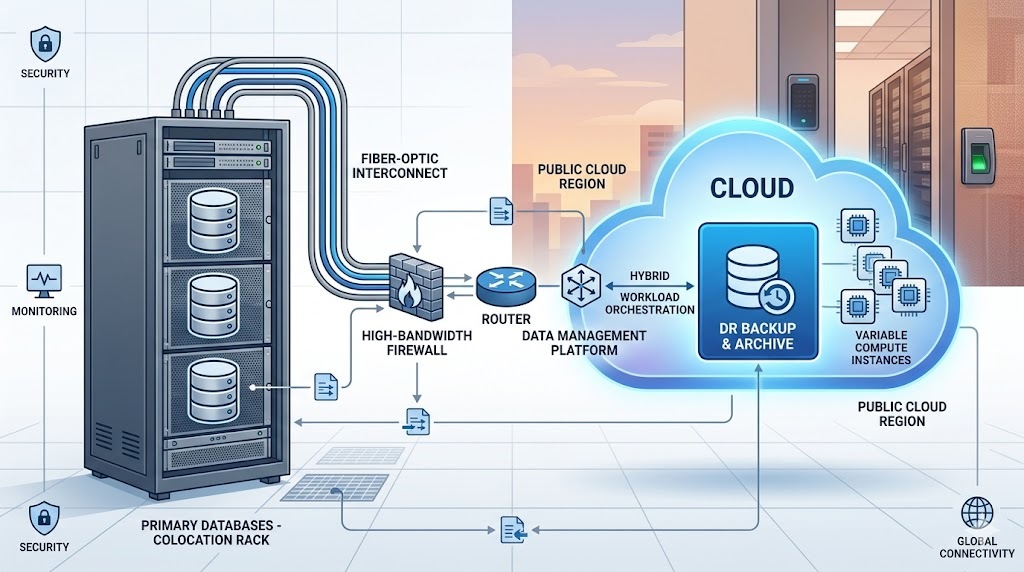
Disaster recovery and backup. Using cloud for DR and backup while running primary workloads in colocation is a legitimate hybrid strategy — it preserves physical control over active workloads while using cloud’s geographic distribution for resilience.
Early-stage businesses. If you are pre-revenue or early-revenue with no ability to commit to physical infrastructure costs, cloud is the right starting point. The colocation calculus changes as you scale.
The Hybrid Reality: Most San Antonio Businesses Will Run Both
The more accurate frame for 2026 is not “cloud or colocation” — it is “which workloads belong where.”
A clinical data operation might run:
- Active patient data and compute-intensive analysis workloads in colocation (data residency control, audit evidence, predictable cost at scale)
- DR and backup in cloud (geographic distribution, zero capital cost for secondary copies)
- Development and test environments in cloud (flexibility, disposability, no long-term commitment)
- SaaS-delivered client-facing applications in cloud (regional availability, managed services)
This hybrid architecture is increasingly the norm for sophisticated San Antonio operations — and it is exactly what SATC is positioned to support. Office space, colocation infrastructure, and enterprise fiber all under one roof, with cloud integration built into the connectivity architecture.
What This Means for San Antonio Businesses Evaluating Colocation
If you are evaluating San Antonio colocation options, the relevant questions are:
- What workloads, specifically, are you considering moving to physical infrastructure — and why (cost, compliance, performance, control)?
- What is your 36-month compute cost trajectory in cloud, including egress fees, for those workloads?
- What compliance documentation requirements does your industry or client base impose, and how does your current cloud architecture satisfy them?
- What is the provisioning timeline you need — and can a San Antonio colocation facility meet it?
SATC Co-Location provides a direct path to answering those questions with a facility walkthrough, a technical consultation, and transparent provisioning options.
Request a Colocation Consultation →
Frequently Asked Questions
Is colocation cheaper than cloud for San Antonio businesses? For steady-state, compute-intensive workloads, colocation typically delivers lower TCO than equivalent public cloud compute over a 3–5 year horizon — particularly when egress fees are included in the cloud calculation. Variable or unpredictable workloads, early-stage businesses, and DR/backup use cases often favor cloud. The honest answer is workload-dependent.
What compliance frameworks are easier to satisfy with colocation vs. cloud? Physical access control requirements under HIPAA, CMMC Level 2+, PCI DSS, and SOC 2 are generally easier to document and satisfy in a colocation environment where you control physical access. Cloud providers offer their own compliance documentation, but the physical audit trail for your specific equipment requires a colocation environment.
Does SATC Co-Location support hybrid cloud architectures? Yes. SATC Co-Location’s carrier-diverse fiber infrastructure (AT&T, Spectrum, Level 3) supports hybrid connectivity architectures — including direct cloud connectivity options. [PENDING: Evan Gray — confirm whether Direct Connect / ExpressRoute / direct cloud peering options are available from the SATC colo environment]
How does San Antonio compare to other Texas markets for colocation? San Antonio has 44 data center facilities, competitive CPS Energy electricity rates, a low natural disaster risk profile, and mid-market scale relative to Dallas-Fort Worth (where data center vacancy is extremely tight). For SMB-to-mid-enterprise colocation needs, San Antonio offers infrastructure depth without the market saturation affecting Northern Virginia and Dallas.
What makes SATC Co-Location different from other San Antonio data centers? SATC Co-Location is the only colocation facility in San Antonio where you can have both office space and data center infrastructure at the same address. For technology companies, life sciences operations, and cybersecurity firms that run both, the operational simplification of a single campus is a meaningful advantage over split-site management.