
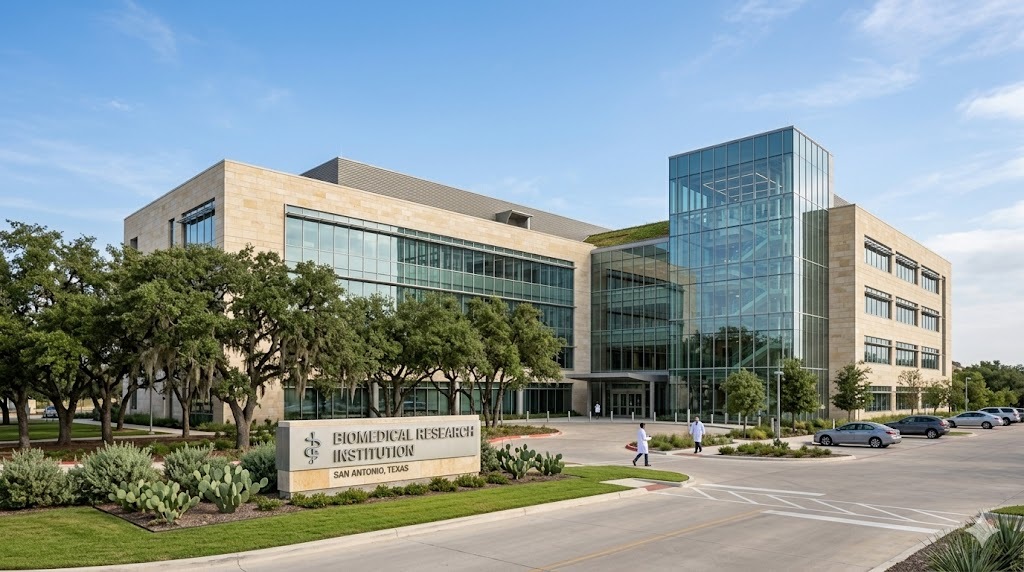
When people talk about Texas biotech, they usually mean Houston — home to the Texas Medical Center, the
world’s largest medical complex. They sometimes mean Austin, where venture capital flows toward health tech startups. San Antonio rarely comes up.
That is changing. And for life sciences companies evaluating their next facility location, the window to move into San Antonio before the market gets competitive is still open — but not indefinitely.
The South Texas Medical Center: A Research Engine the Rest of Texas Doesn’t Talk About
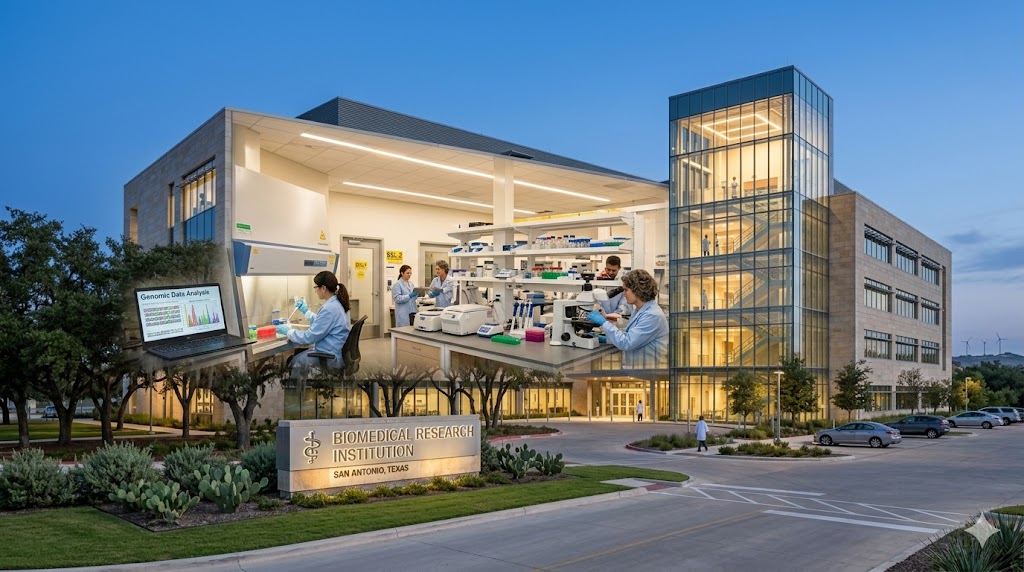
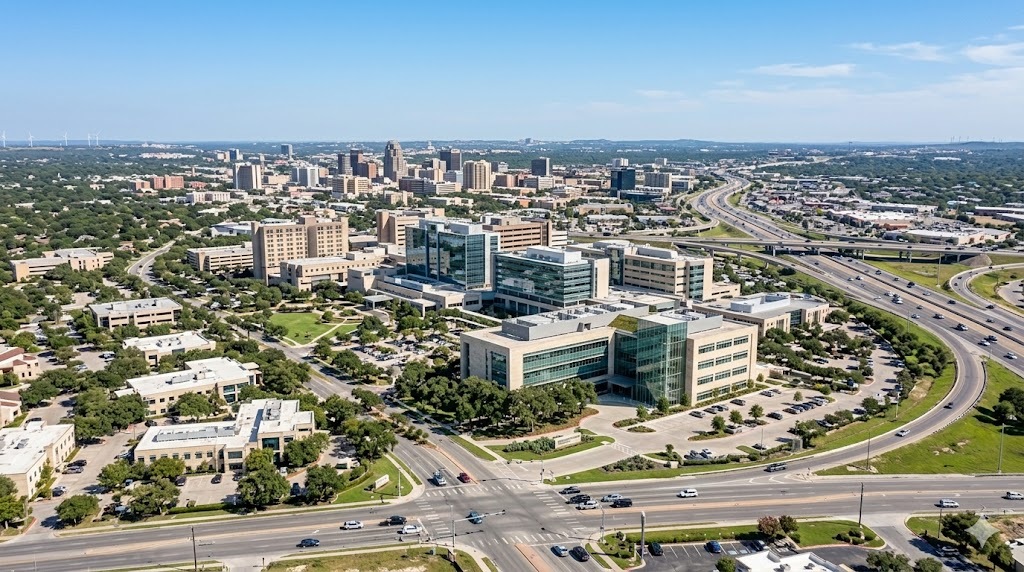
Start with the anchor. The South Texas Medical Center (STMC) in San Antonio covers more than 900 acres and houses over 45 institutions — including UT Health San Antonio, Methodist Health System, CHRISTUS Health System, the South Texas Veterans Health Care System, and Texas Biomedical Research Institute (Texas Biomed).
The STMC employs more than 35,000 people and generates over $3 billion in annual economic output. It is one of the 10 largest medical complexes in the United States by employment and institution count.
Texas Biomed, in particular, is worth understanding as a research engine. It is one of the nation’s leading infectious disease research organizations, with BSL-4 capability (one of fewer than a dozen facilities in the United States with the highest biosafety level), federal research funding across NIH, DARPA, and Department of Defense programs, and a track record of spinning out commercially relevant research.
This is the ecosystem that San Antonio’s emerging private biotech sector draws talent from, partners with, and commercializes adjacent to. It is a meaningful structural advantage for companies that locate here.
Military Health Research: San Antonio’s Underexplored Biotech Angle
San Antonio hosts the highest per-capita concentration of active military personnel of any major U.S. city. Joint Base San Antonio brings together Lackland Air Force Base, Fort Sam Houston, and Randolph Air Force Base — and with them, the military health system infrastructure that supports one of the nation’s largest active duty and veteran populations.
This creates a biotech opportunity that most people outside of San Antonio miss entirely.
The military health system is a significant and often underserved market for medical device companies, clinical diagnostics providers, healthcare IT platforms, and biomedical research organizations with federal contracting experience. San Antonio-based life sciences companies have a geographic and relationship advantage in pursuing this client base that organizations based in Austin, Dallas, or Houston do not.
The San Antonio Military Medical Center (Brooke Army Medical Center), the South Texas Veterans Health Care System, and the military’s investment in infectious disease research and combat casualty care create a pipeline of clinically relevant, federally funded research that commercial biotech organizations can partner with, license from, or provide services to.
What the Lab Space Gap Means for Incoming Companies
Here is a specific market reality that matters for companies evaluating San Antonio for a biotech facility: the supply of purpose-built, immediately available laboratory space has not kept pace with the sector’s growth.
San Antonio has two established lab space providers: Alamo BioCenter, a shared wet lab coworking facility in the Medical Center district, and VelocityTX Co-Labs, a BSL-2 private and shared lab environment at the East Side Innovation Campus. Both serve important segments of the market. Neither provides the combination of lab space, full professional office suites, enterprise fiber infrastructure, and physical compute infrastructure under one roof.
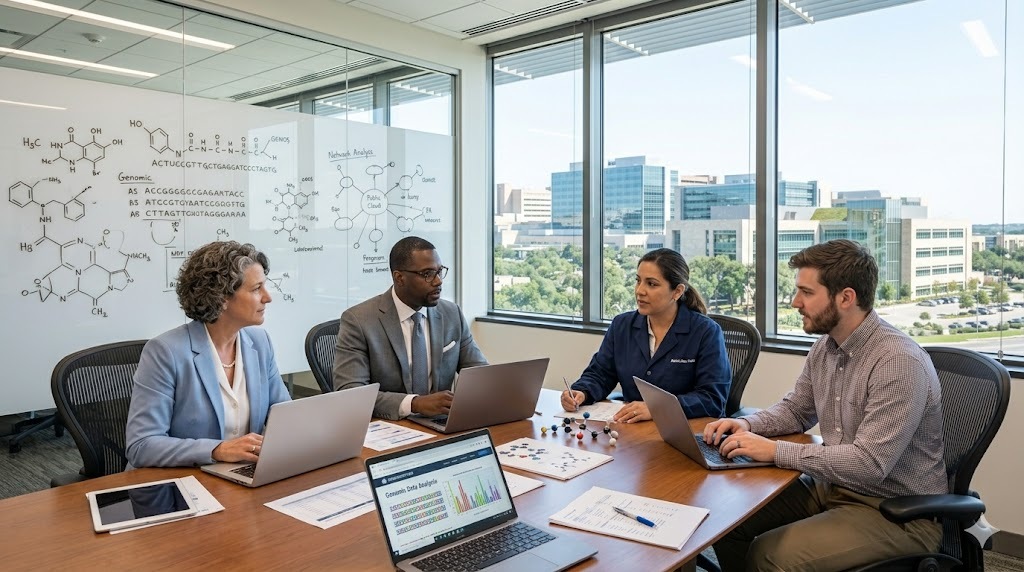
This gap matters because the businesses driving the fastest growth in San Antonio’s life sciences sector are not academic spinoffs sharing a bench once a week. They are commercial-stage operations with full teams, data-intensive research workflows, compliance requirements, and infrastructure needs that a coworking bench arrangement does not address.
San Antonio Technology Center at 3463 Magic Dr is positioned to serve this commercial-stage demand. With enterprise fiber (three-carrier peering with AT&T, Spectrum, and Level 3), an on-site data center through SATC Co-Location, biotech-ready laboratory space, and a tenant base that is approximately 36% life sciences organizations, SATC is the only address in the Medical Center district where a commercial-stage biotech company can consolidate its operational and research footprint at a single location.
The Talent Argument for San Antonio
For biotech companies evaluating San Antonio, the workforce question usually comes up early. Is the talent here?
The answer is more nuanced than a simple yes or no — and in the right subsectors, it is clearly yes.
Research science talent. UT Health San Antonio’s graduate programs in biomedical sciences, pharmacology, and related disciplines produce graduate-level research talent annually. Texas Biomed employs hundreds of research scientists and has built a culture of training specialized infectious disease, immunology, and virology researchers. This talent flows into San Antonio’s private sector when commercial opportunities are present.
Clinical data and healthcare IT. The STMC’s 35,000+ employee base includes a substantial concentration of clinical informatics, healthcare IT, and clinical operations professionals. For life sciences companies building software, platforms, or data services for the healthcare system, this is a recruiting pool that does not exist at the same concentration in other Texas cities.
Cybersecurity and data engineering. San Antonio’s defense technology sector has produced one of the deepest cybersecurity talent pipelines in the country — relevant for life sciences companies managing regulated data environments, clinical trial data security, and bioinformatics infrastructure.
The talent argument is not unlimited. San Antonio does not yet have Austin’s concentration of early-stage tech talent or Houston’s depth of chemical engineering and petroleum-adjacent bioprocessing expertise. For specific roles, recruiting may require relocation packages or remote arrangements. But for the core roles commercial-stage biotech companies need — research scientists, clinical data professionals, regulatory affairs specialists, and enterprise IT — San Antonio is more talent-rich than its national reputation suggests.
Cost Structure: The Numbers Behind the San Antonio Advantage
Cost structure is not glamorous, but it is real.
Office and lab space: Medical Center submarket office leases average $24–$30 per square foot per year. Equivalent-quality space in Austin’s medical corridor commands $45–$60+/SF. The delta on a 5,000 SF lab and office footprint over a 5-year term is $500,000 to $1.5 million in lease cost alone — capital that stays in operations rather than going to rent.
Labor: San Antonio’s cost of living is approximately 12–15% below Austin and 18–22% below the national average for comparable urban markets. Salary expectations for equivalent technical roles trend 8–12% below Austin norms, with broadly comparable availability in the relevant specializations.
State environment: Texas has no state income tax, a competitive corporate tax environment, and active economic development programs at both the state (Texas Enterprise Fund) and local (SAEDF) level. San Antonio specifically has pursued life sciences investment as a priority vertical.
For a growth-stage biotech company making a 10-year bet on a facility location, these structural cost advantages compound significantly.
Why Now Is the Right Time to Evaluate San Antonio
The window that exists today — low commercial real estate costs, available lab space, uncrowded talent market, and a still-emerging ecosystem with institutional anchors already in place — does not stay open indefinitely.
Austin did not become the crowded, expensive market it is today overnight. Houston’s Texas Medical Center ecosystem took decades to reach critical mass. San Antonio is at an earlier point on that curve.
The life sciences companies that move to San Antonio now get: below-market facility costs, access to a rapidly growing institutional research ecosystem, a military health market with minimal competition, and the compounding advantage of being an early mover in a community where relationships and reputation matter.
The companies that wait will pay more, recruit harder, and arrive after the relationships have already been formed.
Getting Started in San Antonio
If you are evaluating San Antonio for a life sciences facility, the conversation starts with what you need.
San Antonio Technology Center at 3463 Magic Dr offers laboratory space, professional office suites, enterprise fiber, and on-site colocation infrastructure in the Medical Center district — the only address in San Antonio where all of those can be at a single lease address.
Tour SATC’s lab and office space →